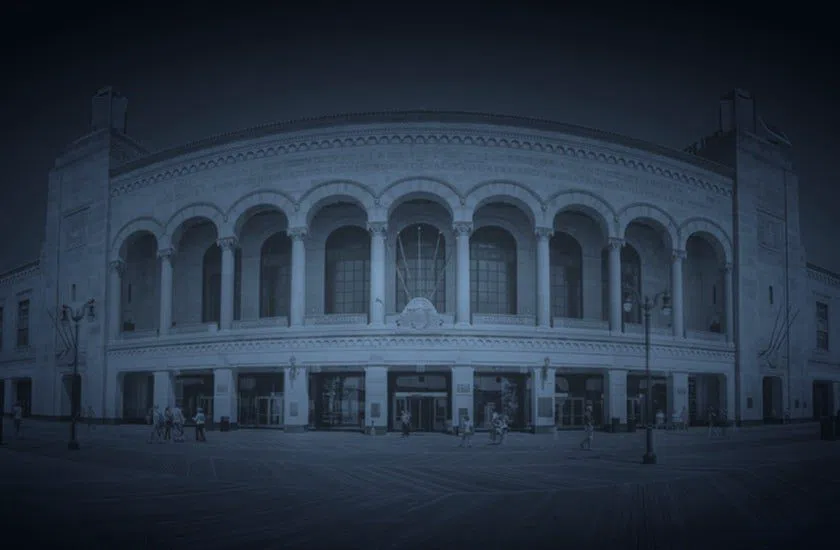

The first Miss America was crowned in September 1921 because Atlantic City's hoteliers wanted one more week of business after Labor Day. They assembled a rolling-chair parade, a bathing-suit review on the sand and a trophy shaped like a golden mermaid, and a sixteen-year-old entered by a newspaper back home walked off with it. Everything that followed (the runway, the organ, the protests, the rival pageant staged the same night) sits inside roughly two miles of Boardwalk and back streets you can still walk in a day.
The week that needed filling
The pageant was not conceived as a cultural institution. It was a season-extender. Atlantic City ran on rail excursions and day-trippers, and the money stopped dead at Labor Day, so the business committee built a multi-day autumn festival to hold visitors in town for another week. The beauty contest was one event inside that festival, and not even the headline one: there was a rolling-chair parade along the Boardwalk, a bathers' revue on the sand, bands, and a crowd judged as much by its noise as by any panel.
The official name tells you how it worked. It was an inter-city beauty contest, with newspapers around the country running their own local heats and sending the winner to the shore with a chaperone. The 1921 winner was sixteen years old, slight, and almost entirely unprepared for what the title would become. The phrase "Miss America" attached to her afterwards; it was not announced over her head on the night. She came back the next year to defend it and lost.
Then it nearly died. Church groups and women's clubs pushed hard against a bathing-suit contest for teenagers, the organisers dropped the event after 1927, and it only became a permanent fixture again in the mid-1930s. The version most people picture, with scholarships, talent rounds, a televised runway and a song, was assembled decades later. The scholarship fund dates from 1945.
Almost nothing physical survives from 1921 itself. The piers that hosted the early rounds burned, blew down or were rebuilt beyond recognition, and there is no plaque marking a first crowning. What survives is the chain of places that carried the story forward, and several of them are worth your afternoon on their own terms.
The room where the crown changed hands
Start at Jim Whelan Boardwalk Hall (Boardwalk at Georgia Avenue), because this is the room. The pageant moved onto this floor in 1940 and stayed until 2018, which means the runway, the swimsuit parade, the tears and the televised crownings that fixed Miss America in public memory all happened under this ceiling, still the widest clear span of its era, built to swallow a crowd of 10,000 and more.
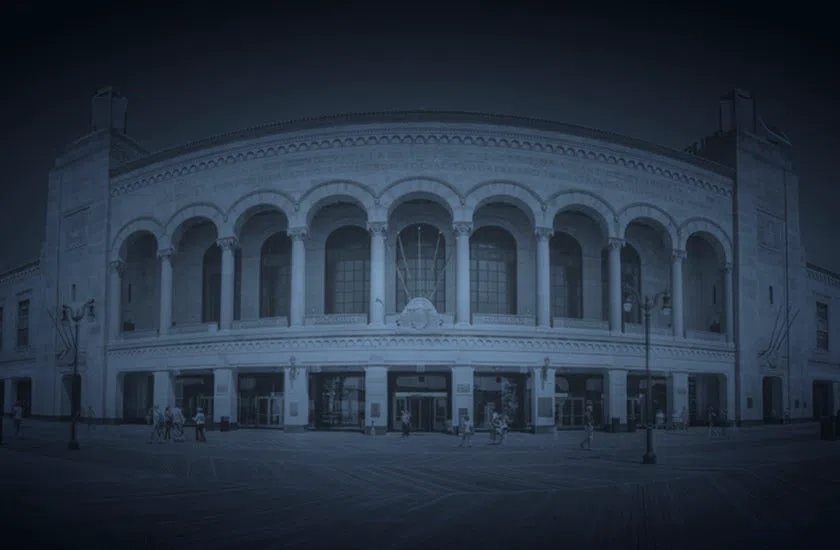
The concourse is free to walk. This is a working arena rather than a museum, so what you get is scale instead of interpretation. Stand at floor level and the geometry of the thing explains the pageant better than any display case would. A contestant walked out of a tunnel into a bowl where the furthest seats were the length of a city block away, with no video screens to carry her face, which is precisely why the walk and the posture mattered so much.
The other reason to come is the Midmer-Losh pipe organ built into the hall, an instrument on a scale nothing else in the world matches. Free recitals run at noon, and the Curator's Tour runs Wednesdays at 10am with advance registration required. That registration is not a formality; the tour goes into chambers in small numbers, so a group of any size needs to book well ahead and should expect to be split. Check the events calendar before you plan anything here, because show days close the public areas entirely and you will find yourself looking at a locked lobby. Event tickets, if you want to see the room full, run roughly $40 to $150.
The skyscraper by the sea
Five minutes up the Boardwalk, The Claridge Hotel (Brighton Park, a block off the Boardwalk) is the last of the city's great pre-casino hotels and the only building on this trail where the pageant's administrative life actually lived. The Miss America Organization kept offices here. Marilyn Monroe stayed in the building when she came to town as Grand Marshal of the Miss America parade in the 1950s, a booking that tells you how much national pull the pageant had by then, and how far it had drifted from a committee trying to fill a slow week in September.

The two restored ballrooms are the thing to see, and they give the honest picture of mid-century pageant week: this is where the sponsors' receptions and the chaperoned gatherings happened while the public watched the runway down the street. They are event spaces, so access depends on what is booked. Ask at the desk rather than assuming.
VÜE, the rooftop bar, handles the modern version of the same job. It is a sound stop for a drink with a long view down the Boardwalk, cocktails land around $14 to $18, and in season you should call ahead for a table. Larger groups can be accommodated for a bar party, but turning up twelve-strong on a summer Saturday without a reservation will not work. Rooms run roughly $90 to $250, which makes it a reasonable base for this particular itinerary; if the dates are tight, compare it against the wider Atlantic City hotel search before committing.
The pier the crowds spilled onto
Walk northeast and Steel Pier (Boardwalk at Virginia Avenue) is the other half of pageant week, the part that had nothing to do with judges. Open since 1898, it was where the September crowds went once the formal events let out, and it remains the loudest stretch of the Boardwalk.
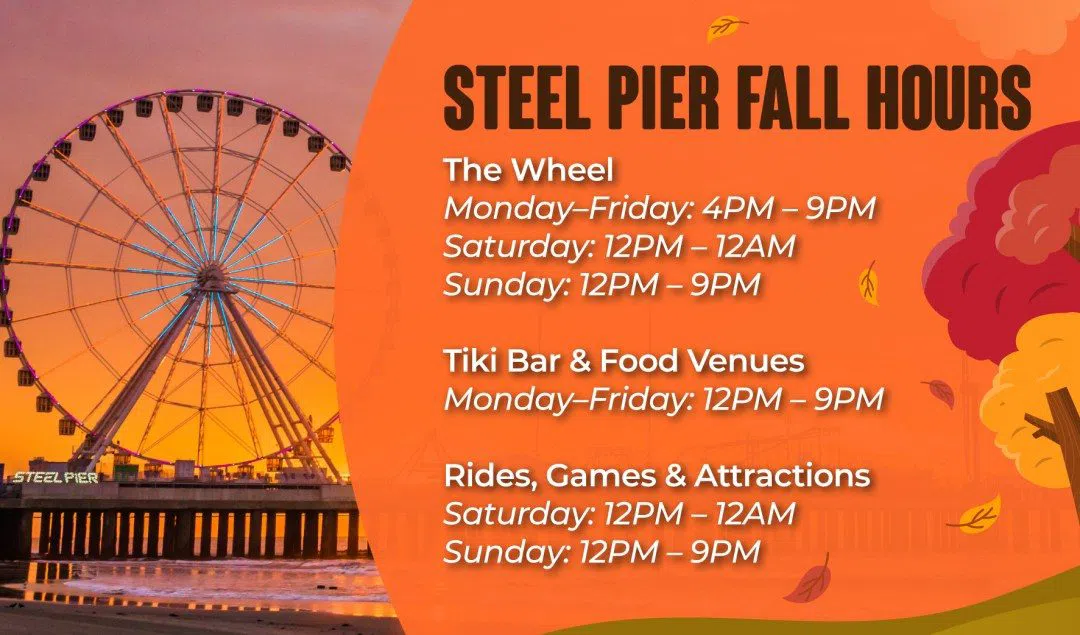
For this trail, the single thing worth buying is the observation wheel. Around $20 a head buys about ten minutes, and from the top you get the whole geography of the story at once: the Hall's bulk to the southwest, the Claridge standing clear of the newer towers, the beach where the bathers' revue was staged, and the grid of avenues running inland. If you only do one paid attraction in the city, this is the one that makes the history legible.
Rides run roughly April to October, the wheel stretches from March to December, and hours are seasonal, so in shoulder months check before you walk down. Groups are easy: ticket books are sold in bulk at the booths and nothing needs reserving.
The other pageant, two blocks and a world away
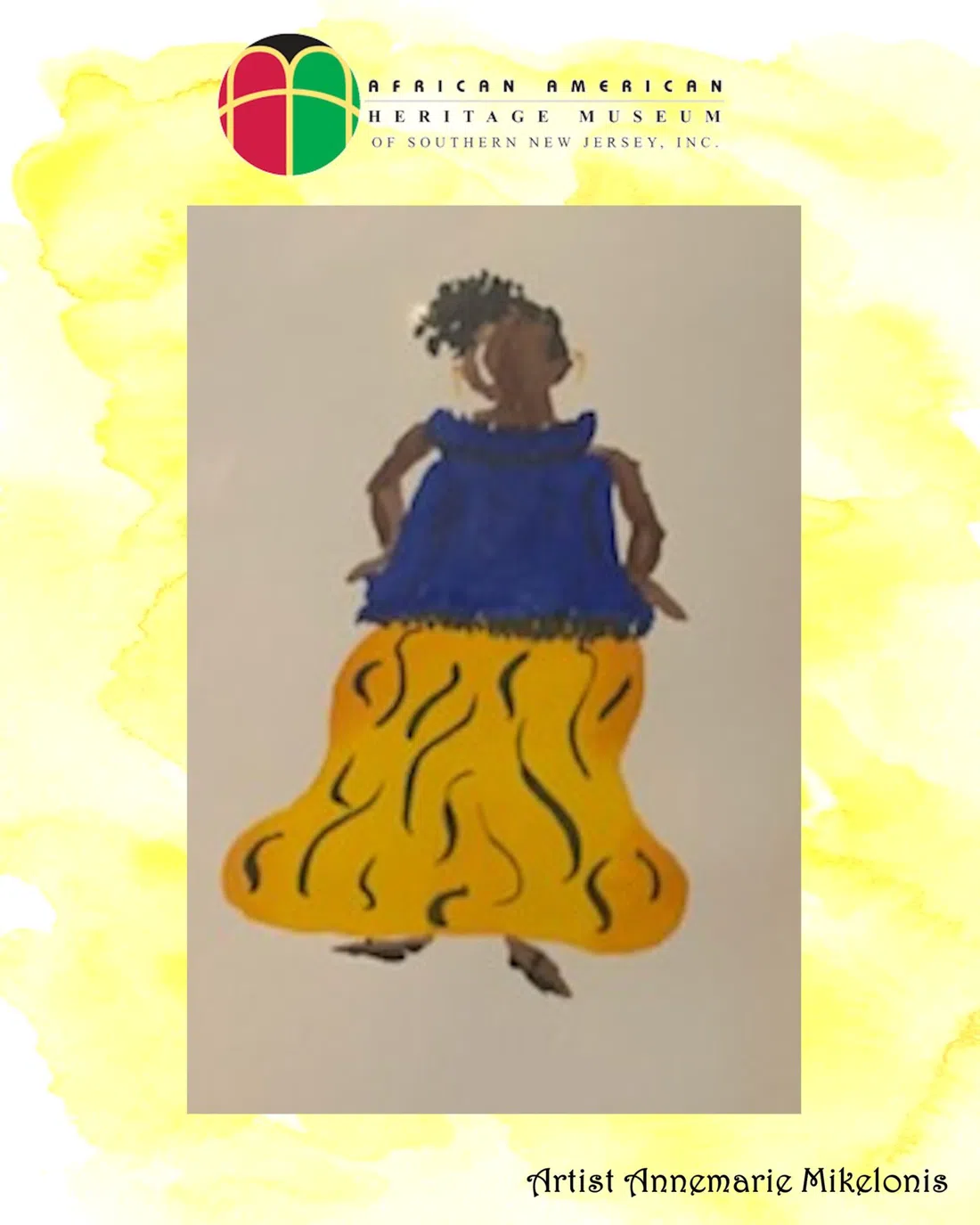
Any honest account of the Boardwalk pageant has to include the night of 17 August 1968, and the African American Heritage Museum of Southern New Jersey (a short ride inland from the Boardwalk) is the collection that keeps it. That evening, while the pageant ran at the Hall, the first Miss Black America was staged in a hotel ballroom a few blocks away, a direct answer to a contest that had gone almost fifty years without crowning a Black winner. The same night, on the Boardwalk outside the arena, women's liberation demonstrators held the protest that made the pageant a national argument rather than a national pastime.
Two pageants, one evening, a few hundred metres apart. You will not hear about the second one inside the arena, which is exactly why this stop belongs on the route rather than as an optional extra.
The museum is open Wednesday to Sunday, 11am to 5pm. Admission is $3 for adults and $2 for students as a donation, free on Wednesdays and free for military. It is a working regional collection rather than a slick visitor attraction, and it rewards an hour of actual reading. Groups and school parties are welcome and space can be hired for events, but call (609) 704-5495 to arrange a slot; turning up unannounced with a coach will not work.
An elephant with a stake in the story
Lucy the Elephant (a short ride south along the shore) reads like a detour and is not one. The six-storey tin-and-timber elephant was built in 1881, turns 145 this year, and is the oldest surviving roadside attraction in the country. The connection is a man: John L. Young, the pier operator who had a hand in Lucy's early life and a hand in inventing the pageant, which is about as neat a summary of early Atlantic City's business model as you will find. Contestants have filmed segments at her feet in the decades since.
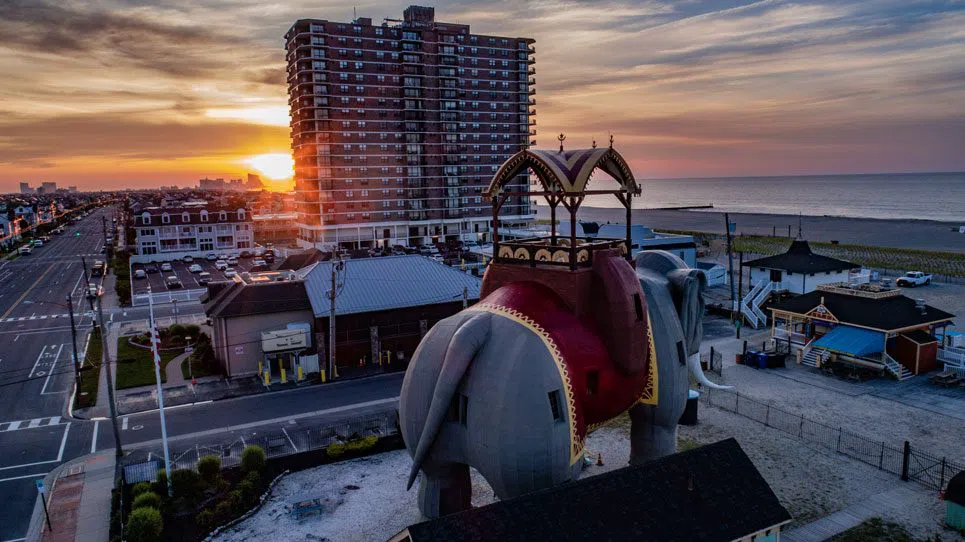
Tours are guided, half-hourly and run in fixed small batches, so a group of more than a dozen will be broken up and queued. Book ahead or budget time for standing around. Tickets are $8.50 for adults and $4.00 for children aged 3 to 12. Hours are seasonal, so confirm before travelling; in winter you can find yourself admiring the exterior and nothing else. Allow about two hours round trip from the Boardwalk, including transport.
Where the officials ate and where everyone else queued
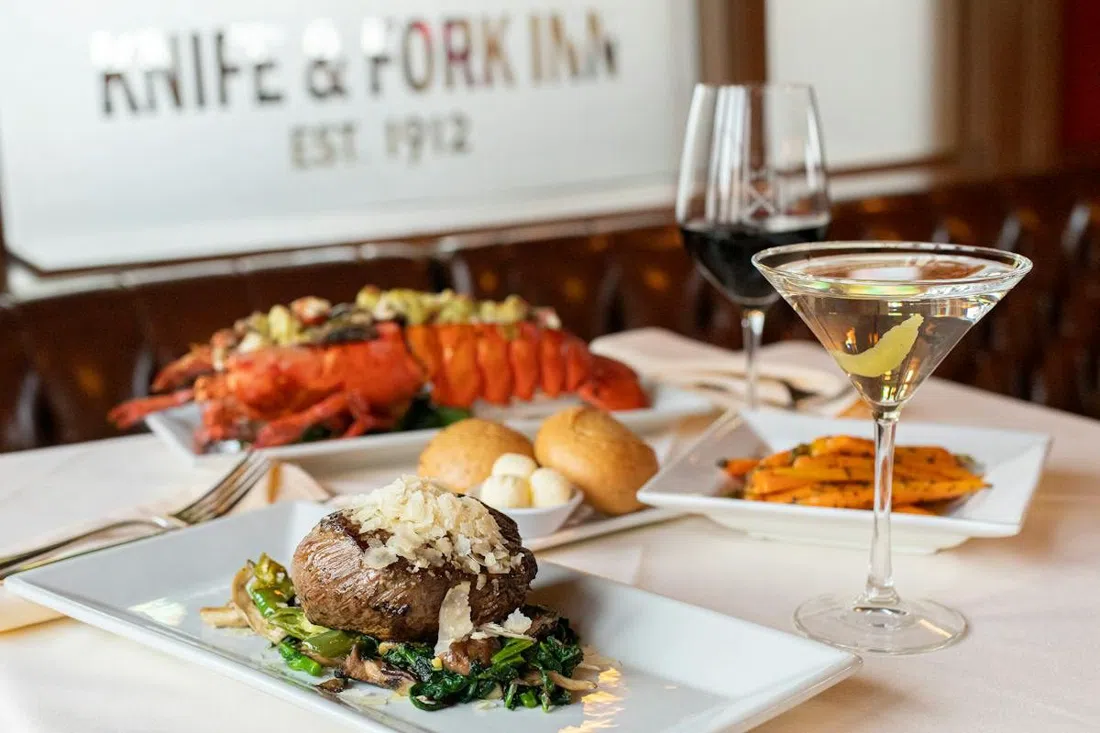
The pageant's social machinery ate at Knife & Fork Inn (Atlantic Avenue at Pacific, the southwest end of the strip). It opened in 1912 as a men's private club and turned into an exclusive dining room on the eve of Prohibition, which made it the room where officials, sponsors and chaperones did the quiet half of pageant week. It is still family-run and still a serious seafood restaurant rather than a theme. Dinner nightly from 4pm, mains roughly $35 to $60, and reservations are strongly advised. This is a couples-and-small-parties room by nature, though private parties are taken if you organise them in advance.
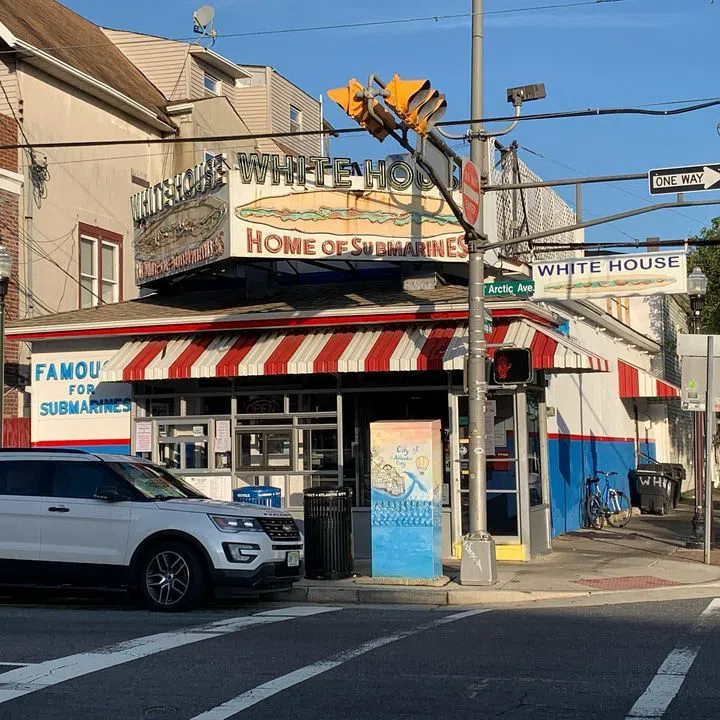
The counterweight is White House Sub Shop (Arctic Avenue, inland from the Boardwalk), open since 1946 and functioning as the city's unofficial wall of record. The photographs include the entertainers and visiting dignitaries the pageant pulled into town every September, and the sandwiches are the reason locals have kept the place alive for eighty years. Subs run roughly $12 to $20, open daily 10am to 8pm. It is counter service in a tiny room. A group can queue and take the food away happily; a group expecting to sit down together will be disappointed.
Ending the day on Tennessee Avenue
Finish at Tennessee Avenue Beer Hall (the Orange Loop, two blocks off the Boardwalk), which is the one stop on this list that exists because of what the city is doing now rather than what it did in 1921. The Orange Loop revival turned three short blocks into the only part of town where you can sit outdoors with a local beer and not be inside a casino.
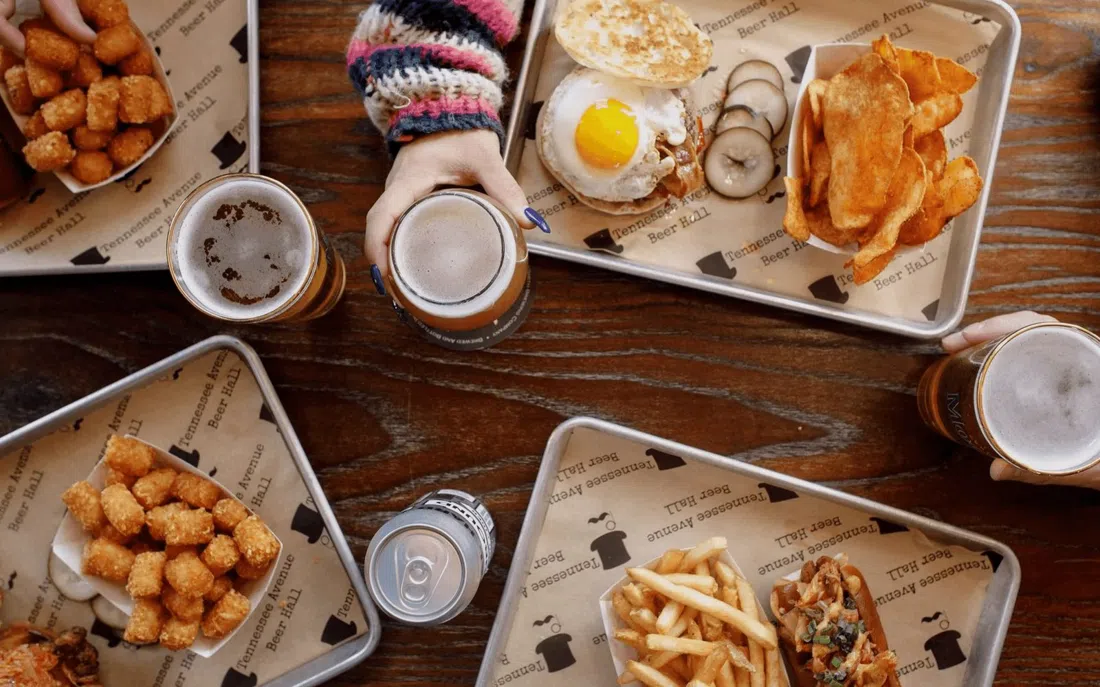
It is also the best group venue on the trail by a wide margin: 175 outdoor seats across picnic benches and a tent, so a party of fifteen can actually be seated together. Call (609) 541-4099 to reserve benches, especially at weekends. Pints run roughly $7 to $9 and plates $14 to $20. It is closed Mondays, so build around that.
Doing the whole thing in a day
Pick a Wednesday. It is the only day that lines up the 10am Curator's Tour at the Hall with free admission at the heritage museum, and it avoids the Monday closure at the beer hall.
A workable shape: organ tour at 10am, an hour on the arena concourse, then five minutes up the Boardwalk to the Claridge ballrooms. Subs on Arctic Avenue for lunch, about fifteen minutes on foot inland. Afternoon at the heritage museum, then back to the Boardwalk for the wheel at Steel Pier, roughly a mile northeast of the Hall and about twenty minutes' easy walking. Dinner either southwest at Knife & Fork or, for a group, benches on Tennessee Avenue. Lucy needs its own half-day; slot her in on the way into or out of town rather than squeezing her into the middle. More context on the rest of the city sits in our Atlantic City guide.
Practical notes
Getting around is mostly a walk. The Boardwalk core (Hall, Claridge, Orange Loop, Steel Pier) is one flat stretch of under two miles end to end, and the Boardwalk itself is the fastest route on foot. For the inland and southwest stops, the jitney minibuses running along Pacific Avenue operate around the clock for a few dollars a ride and are the local answer to every short hop. Rolling chairs on the Boardwalk are a tourist ride, not transport, and are priced accordingly. Lucy is beyond comfortable walking distance.
Card is accepted nearly everywhere, but carry a small amount of cash for the museum donation, jitney fares and ticket booths. Keep singles for the organ-tour and tour-guide tip culture if you want to.
September is the atmospheric month and the weather is at its best, but the pageant itself left the building after 2018, so you are visiting the history rather than the event. Seasonal closures are the real risk: Steel Pier rides run roughly April to October, the wheel to December, and Lucy keeps seasonal hours. Check the Hall's events calendar first, every time.
A lean day runs about $45 to $60 a head: free concourse and organ recital, $3 museum, $20 wheel, a $15 sub. Add $8.50 for Lucy. A fuller version with dinner at Knife & Fork and rooftop drinks at the Claridge lands nearer $130 to $160. Rooms on the trail start around $90 in the quieter months.
For parties of ten or more, the honest ranking: the beer hall and Steel Pier take you without friction, the Hall and Lucy need advance booking and will split you into batches, the museum needs a phone call, Knife & Fork needs a private-party arrangement, and the sub shop will only ever be a takeaway stop.